.png)
.png)
What Is an Auger Used For?
- Bull Dog Tool

- May 31
- 4 min read

An auger is a tool that moves material using a rotating screw. You can find augers in farming, construction, and many industrial jobs. In the oilfield, augers help remove sand, debris, and other material from inside a well.
When sand builds up in a wellbore, it can block production and make well work harder to perform. A downhole auger helps clear that material and restore access to the well. Today, augers are an important part of many oilfield downhole tools used during intervention and maintenance operations.
What Is an Auger?
An auger uses a central shaft and spiral flighting to move material. As the tool turns, the spiral moves material along the length of the auger.
Many industries use types of augers for excavation and material handling applications. Oilfield augers serve a different purpose. Instead of digging a new hole, they remove material that has already collected inside a well.
Because of their ability to move solids efficiently, augers have become valuable wellbore cleanout tools for operators working in challenging downhole environments.
What Is an Auger Used for in Oil Wells?
Operators use downhole augers during cleanout and well intervention work. These downhole oilfield applications help operators maintain access to equipment and improve overall well performance.
Removing Sand and Debris
Sand can accumulate in the wellbore over time. This buildup can reduce production and block access to downhole equipment.
An auger helps lift sand and debris from the well so operations can continue. This makes augers effective sand removal tools for many oil and gas wells.
Cleaning Out Around Downhole Equipment
Sand and fill can cover tools such as:
Bridge plugs
Packers
Before crews can work on this equipment, the debris often needs to be removed. An auger can help clear the area and prepare the well for intervention activities.
Working in Low-Fluid Wells
Some wells do not have enough fluid for traditional cleanout methods. In these situations, an auger can provide another way to remove material from the wellbore.
Many operators use augers as part of non-circulating wellbore cleanout methods. Operators rely on these tools when fluid levels are low or when they want to avoid adding fluid to the well.
Looking for Wellbore Cleanout Solutions?
Sand buildup, debris, and restricted access can create costly intervention challenges.
How Does a Downhole Auger Work?
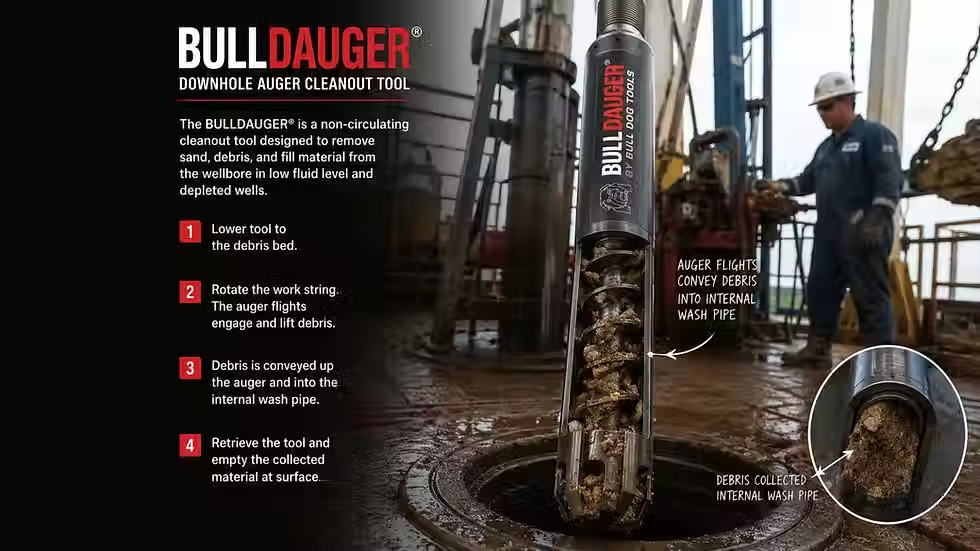
Operators lower the auger into the well until it reaches the debris.
As the work string rotates:
The auger contacts the material.
The spiral flighting lifts the material and moves it upward.
The debris moves upward through the tool.
The auger collects the material and carries it out of the well.
This process allows operators to remove solids without relying only on fluid circulation.
Operators often include a downhole auger cleanout tool in larger cleanout assemblies. This largely depends on the well conditions and intervention objectives.
Learn More About Wellbore Cleanout Methods
Augers are one of several tools used to remove sand and debris from the wellbore.
Why Use an Auger?
Different oilfield cleanout tools solve different wellbore problems.
Augers vs. Bailers
Both tools remove debris from the well. A bailer uses pumping action to collect material. An auger uses rotating flighting to move material.
In wells with low fluid levels, an auger may be the better choice.
Augers vs. Milling Tools
Milling tools cut or grind through hard obstructions. Augers move loose material such as sand, scale, and debris.
If the goal is debris removal rather than cutting, an auger may be the right solution.
Benefits of Using an Auger
Augers offer several advantages:
Removes sand and debris
Helps restore well access
Works in certain low-fluid conditions
Supports intervention work
May reduce formation damage risk
Can lower cleanout costs
These benefits help explain why oilfield auger applications remain important during well maintenance and intervention projects.
Exploring Wellbore Cleanout Options?
Different wells require different cleanout methods. Factors such as fluid level, debris type, and intervention objectives can all influence tool selection.
FAQ
What does an auger do in an oil well?
A downhole auger removes sand, debris, and fill material from the wellbore.
Can an auger remove sand from a well?
Yes. Sand removal is one of the most common uses for a downhole auger.
When should operators choose an auger instead of a bailer?
Operators often choose an auger when fluid levels are low. It also helps when a mechanical cleanout method offers the best solution.
Can an auger work without continuous circulation?
Yes. Some auger systems operate effectively in wells with limited circulation.
Final Thoughts
Augers play an important role in oilfield cleanout work. They help remove sand, debris, and fill material that can slow production and block access to downhole equipment.
For wells with low fluid levels or difficult cleanout conditions, a downhole auger can be an effective solution. Augers continue to support well intervention, maintenance, and other critical downhole oilfield applications.
Need Help Selecting the Right Downhole Tool?
Every well presents unique challenges.


Comments