.png)
.png)
Cutter Tool Types in Drilling & Intervention
The Field Guide to Downhole Cutting
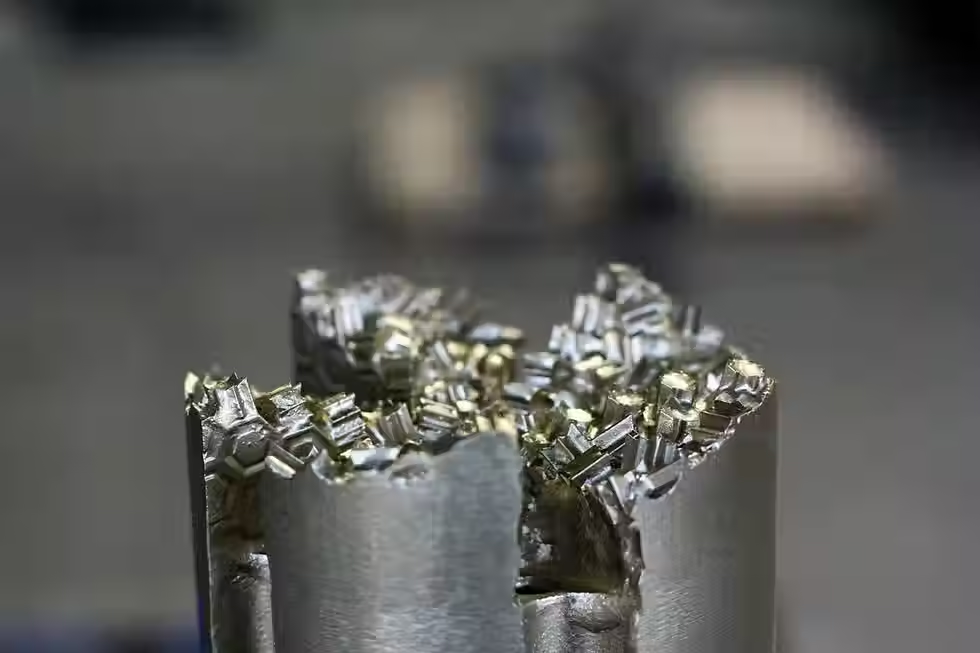
Downhole cutter tool types play an important role in oilfield drilling and intervention work. These oilfield cutter tools are not surface cutting machines or shop equipment. Downhole cutting tools operate inside the wellbore under high pressure, high torque, and elevated temperatures.
Choosing the right cutter type affects safety, efficiency, and cost. Manufacturers build different types cutting tools for specific tasks, from grinding debris to removing casing. Selecting the wrong cutter tool type can increase downtime and create unnecessary risk.
This guide outlines the main cutter tool types used in downhole operations and explains how to choose the right one for your job.
What Are Downhole Cutter Tools?
Crews run downhole cutting tools inside the well to cut, mill, or remove material. Engineers design this wellborn cutting equipment specifically for subsurface environments with limited space and severe operating conditions.
Crews use them to:
Cut casing or tubing
Mill stuck tools or metal debris
Remove cement or bridge plugs
Recondition damaged pipe
Prepare the wellbore for intervention
These oilfield cutter tools work in fluid-filled environments with limited clearance. They must handle torque, pressure, and abrasive conditions without failing.
Common cutting tools names in oilfield operations include junk mills, section mills, casing cutters, taper mills, and pilot mills. Engineers design each cutter type for a specific purpose inside the well.
Junk Mills
Junk mills are one of the most common cutter tool types.
Engineers design them for aggressive material removal. Their cutting face is typically flat or slightly concave and dressed with hard-facing or carbide.
Used for:
Milling broken drill string parts
Grinding metal fragments
Removing irregular obstructions
Operators choose junk mills when the obstruction is uneven or unknown. They focus on grinding instead of precise cutting. Crews often use them as intervention cutting tools to clear debris before recovery work.
Section Mills
Engineers design section mills for casing removal.
In plug and abandonment operations, they remove a full section of casing to allow proper cement placement. The tool expands outward to cut against the casing wall.
Used for:
Plug and abandonment
Window milling
Sidetracking preparation
Unlike junk mills, section mills provide controlled radial cutting. Operators use them when they need to remove a full section of casing. Operators select section mills when they need to remove a structural section of casing.
Casing Cutters
Casing cutters sever pipe from the inside.
Blades extend outward to create a clean circular cut at a targeted depth. They can be mechanical or hydraulic.
Used for:
Casing recovery
Tubing cutting
Controlled pipe removal
Operators choose these casing cutting tools when they need a precise, clean separation before pulling or abandoning tubulars.
Taper Mills & Pilot Mills
Taper mills and pilot mills support wellbore cleanup and preparation.
Taper mills gradually reshape collapsed casing or smooth restrictions. Pilot mills use a guiding nose to stabilize the tool while cutting.
Used for:
Cleaning restrictions
Repair casing
Preparing for further intervention
These cutting tools names are common in remedial work where alignment and control matter. Crews use this wellbore cutting equipment to prepare the hole before running more aggressive milling or casing cutting tools.
How to Select the Right Cutter Type
Selecting the right cutter tool type requires reviewing several factors:
Material Type
Steel, cement, or unknown debris each require different cutting structures.
Casing Size
Tool diameter must match the casing ID and drill string.
Objective
Are you removing debris, cutting pipe, or removing casing?
Torque Limits
The tool must operate within the rig’s torque and RPM range.
Tool Fit
Connections and threads must match existing equipment.
Proper cutter type selection reduces downtime and protects the well. Matching oilfield cutter tools to the application improves safety and performance across the operation.
Downhole Cutter Tools in Intervention Work
Downhole cutting tools are critical during intervention and remedial operations.
They are used for:
Plug removal
Window milling
Sidetracking
Abandonment
Wellbore cleanout
Throughout the well lifecycle — from drilling to completion to intervention — cutter tool types support structural changes and access restoration. These intervention cutting tools often work alongside completion tools, fishing tools, and other milling tools downhole.
Planning the right cutter type improves efficiency across the entire well program.
Engineered Downhole Cutting Solutions for Demanding Applications

The right cutter tool type improves performance and reduces risk.
Bull Dog Tool manufactures downhole cutting tools built for high-torque, high-pressure oilfield environments. We engineer our oilfield cutter tools for proper fit, structural strength, and reliable performance in demanding wellbore conditions.
Planning a drilling or intervention project? Our engineering team can help you choose the right cutter tool type for your operation.
Discuss your cutting requirements with us.
Contact us to determine the right downhole cutter tool type for your well.